
How to Plan an Intimate Beach Elopement: 2026 Guide
Updated: Oct 4
Table of Contents
Start With the Legal Steps: Marriage License and Officiant
Beach Elopement Permit Requirements You Need to Know
Best Time of Day for Beach Wedding Photos and Privacy
Build Your Intimate Beach Wedding Ceremony Script
Your Beach Elopement Checklist: Packing and Logistics
Weather Contingency and Backup Location Planning
Sustainable Beach Practices and Accessibility for Guests
Conclusion
Frequently Asked Questions
Last Updated: October 1, 2026
Start With the Legal Steps: Marriage License and Officiant
A beach elopement is a legally binding marriage, not just a photo shoot, so lock down the license and officiant first.
Step 1: Confirm residency and application rules for the state where you'll marry. Rules apply where the ceremony happens, not where you live. Patterns to know:
No waiting period, no residency requirement: Several states let you apply and marry the same day. Confirm with the county clerk before booking flights.
Short waiting period: Some states impose a 1- to 3-day gap between application and ceremony, the most common reason couples miss their chosen date.
Residency requirement: A few states require in-state residency or a waiting period after filing. If your beach sits in one, build in extra days.
License validity window: Licenses typically expire 30 to 90 days after issuance. A license obtained too early is worthless on ceremony day.
Step 2: Apply in person at the county clerk's office. Most counties require both parties to appear with photo ID and Social Security numbers, or a sworn affidavit if either has been married before. Bring a certified copy of any divorce decree or death certificate, photocopies are usually rejected. Fees commonly fall in the $30 to $100 range, and cash is not always accepted.
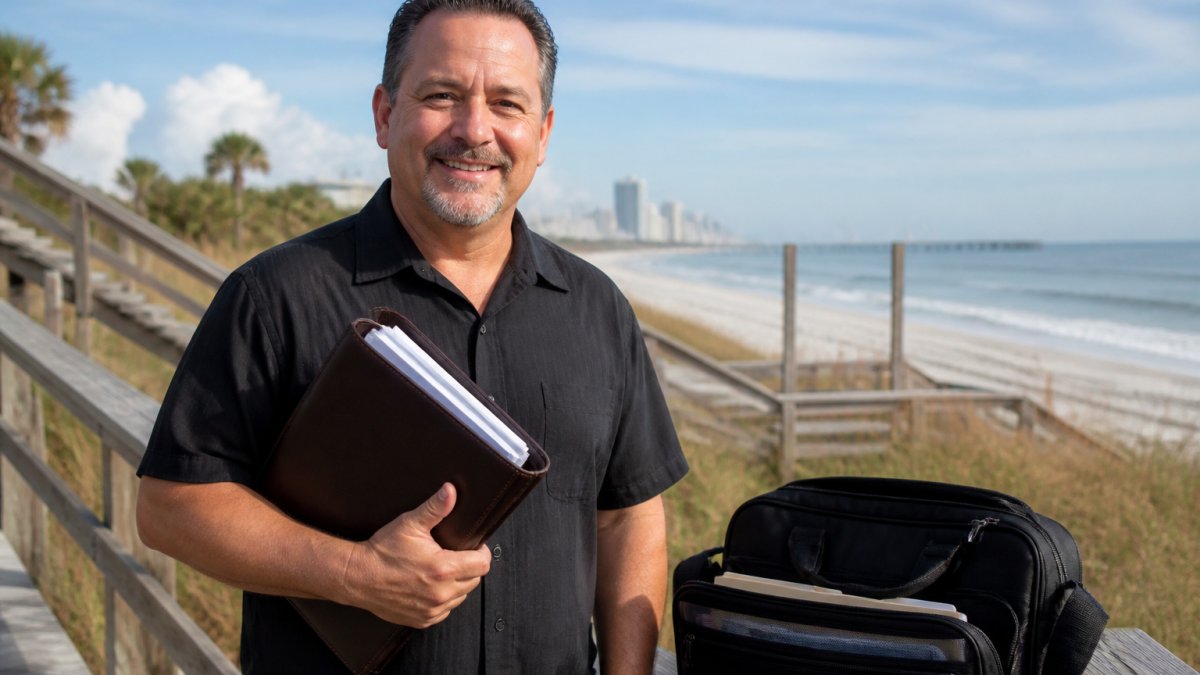
Step 3: Verify your officiant's authority in that specific state. An officiant authorized in one state is not automatically authorized in another.
Legal Item | Typical Range or Rule | Where to Confirm |
Filing fee | $30-$100, varies by county | County clerk's office |
Waiting period | 0-3 days, varies by state | State or county marriage license page |
License validity | 30-90 days | Issuing county clerk |
Witness requirement | 0-2 witnesses | State statute or clerk |
Officiant registration | Required in some states | Secretary of State or county clerk |
Certified copy delivery | 2-6 weeks by mail | County clerk or vital records |
Watch Out Do not assume the rules you read for one beach apply to the next county over. Marriage licenses are issued by county, and a clerk in a neighboring county can quote you a different fee, waiting period, or witness rule on the same day.
Beach Elopement Permit Requirements You Need to Know
Municipal or county public beach: Governed by a parks department ordinance. Small ceremonies (often under 10 to 25 people) may need only a reservation or low-cost permit; larger setups with arches, chairs, or amplified sound usually require a special-use permit filed weeks ahead.
State park or state-managed coastline: Governed by the state parks agency. These are the most structured, with capped group sizes, designated ceremony areas, and seasonal habitat closures.
Federal shoreline (national seashore, national park, or Corps of Engineers land): Governed by the federal agency. Applications need longer lead time and may require insurance.
Private beach or resort property: Governed by the property manager. A reservation may be all that's required, but the resort can restrict outside vendors, limit guest counts, or charge a facility fee.
Is a permit required for our group size and setup? Many jurisdictions exempt ceremonies under a certain headcount, while anything with a structure triggers a permit.
What does it cost, and what is the filing window? Fees commonly fall in the $50 to $300 range for small ceremonies, though state and federal permits run higher. Application windows are often 2 to 8 weeks, and some agencies stop accepting during peak season.
What is prohibited on site? Common bans include confetti, rice, balloons, glass containers, open flames, drones, amplified sound, and structures staked into the sand. Some beaches also restrict access during turtle nesting season.
Question to Ask | Who to Contact | Why It Matters |
Is a permit required? | City or county parks department | Determines your timeline and budget |
Are structures allowed? | Property manager or coastal authority | Arches, chairs, and decor may be banned |
Is the site protected habitat? | State environmental or wildlife agency | Nesting zones close seasonally |
Is the beach federal land? | National Park Service or Corps of Engineers | Longer lead time, possible insurance requirement |
Do vendors need their own permits? | Parks department or property manager | Photographers and officiants may need separate approval |
Watch Out Skipping the permit call is the single most common mistake we see. A ceremony can be shut down mid-vow by a ranger, and the fine usually lands on the couple, not the planner. In some jurisdictions the ranger can also require the group to disperse immediately, which ends the ceremony before the vows are finished.
Vendor permits are a separate question. Even when your ceremony is exempt, your photographer, officiant, or florist may need a commercial use permit. Ask each vendor whether they already hold one for your site, a photographer who has shot there before usually has the paperwork.
Pro Tip If your first-choice beach requires a permit you cannot get in time, ask the parks department for a list of nearby sites with lighter requirements. Many agencies maintain alternate ceremony locations that need only a reservation, and switching sites is far easier than fighting an application deadline.
Best Time of Day for Beach Wedding Photos and Privacy
The best time of day for beach wedding photos is the hour before sunset, often called golden hour, when light turns warm and directional and the crowd thins out. Midday sun is harsh, casting hard shadows and squinting faces. Early morning is the quiet alternative: cooler air, softer light, and near-empty sand.

Pro Tip Build your photography timeline backward from sunset. Give the ceremony 20 minutes, then reserve the final 30 minutes of light for portraits. Once the sun drops, you lose the color that makes beach photos work.
Build Your Intimate Beach Wedding Ceremony Script
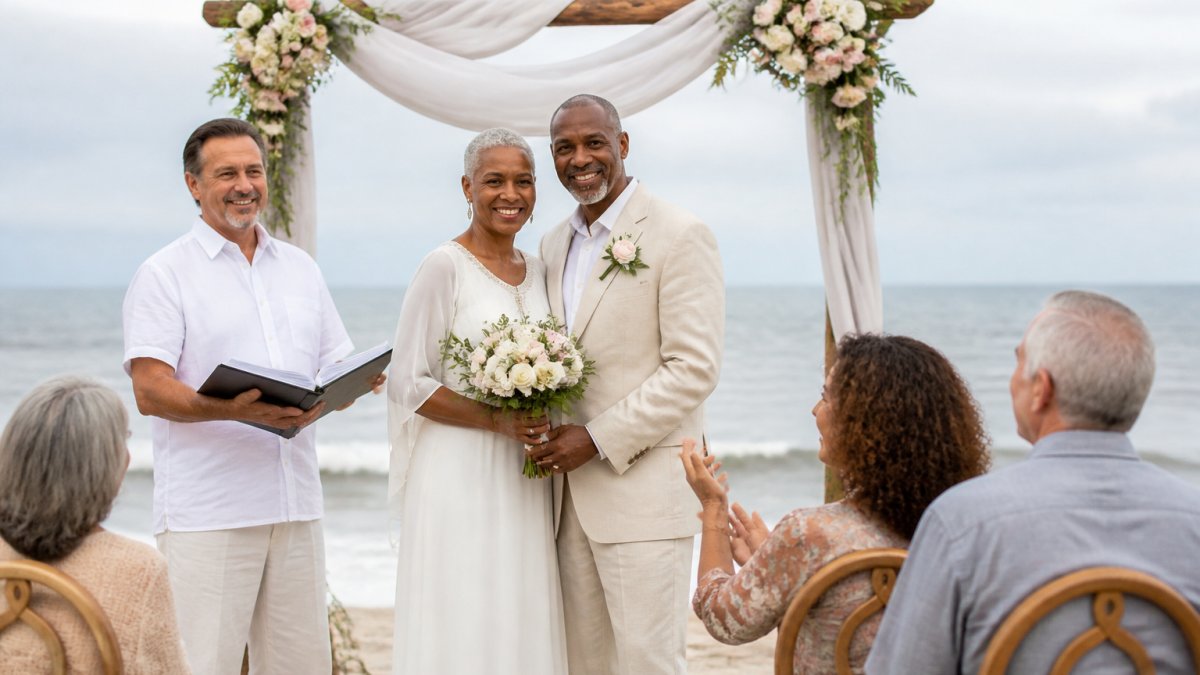
An intimate beach wedding ceremony script runs 15 to 25 minutes for a small elopement, and shorter is almost always better. Structure matters more than length: a welcome, a short reflection on the couple, the vows, the ring exchange, and the pronouncement. Specificity separates a memorable ceremony from a generic one, a script naming how you met, what you value, and why you chose this place will land; a template with your names swapped in will not.
Unbridely
Your Beach Elopement Checklist: Packing and Logistics
A beach elopement checklist should cover documents, attire, and site logistics in that order, because forgetting a license is far worse than forgetting a hairpin. Work through this before you leave:
Marriage license and photo ID for both parties
Signed officiant agreement and permit confirmation
Rings, vow cards, and a pen that works on textured paper
Sand-friendly footwear, flats or wedges rather than stilettos
Wind-resistant hair styling and a light cover-up for breezy evenings
Water, sunscreen, and a small towel for sandy feet
Backup contact for your photographer and officiant
A witness if your state requires one at the signing
Weather Contingency and Backup Location Planning
Weather contingency planning means naming a backup location before you need one. Coastal weather shifts quickly, and wind is the more common problem than rain: it topples arches, whips veils, and drowns out vows. A covered pavilion, beachfront restaurant, or resort balcony can serve as backup, but only if you've confirmed availability and any fee in advance.
Key Takeaway The couples who stay relaxed are the ones who decided their backup plan weeks earlier. The plan itself matters less than having one and knowing when to trigger it.
Sustainable Beach Practices and Accessibility for Guests
Leave No Trace practices keep the beach open to ceremonies like yours: carry out everything you carry in, skip confetti, rice, and balloons in favor of natural petals or nothing, and stay off the dunes and roped-off nesting areas.
Conclusion
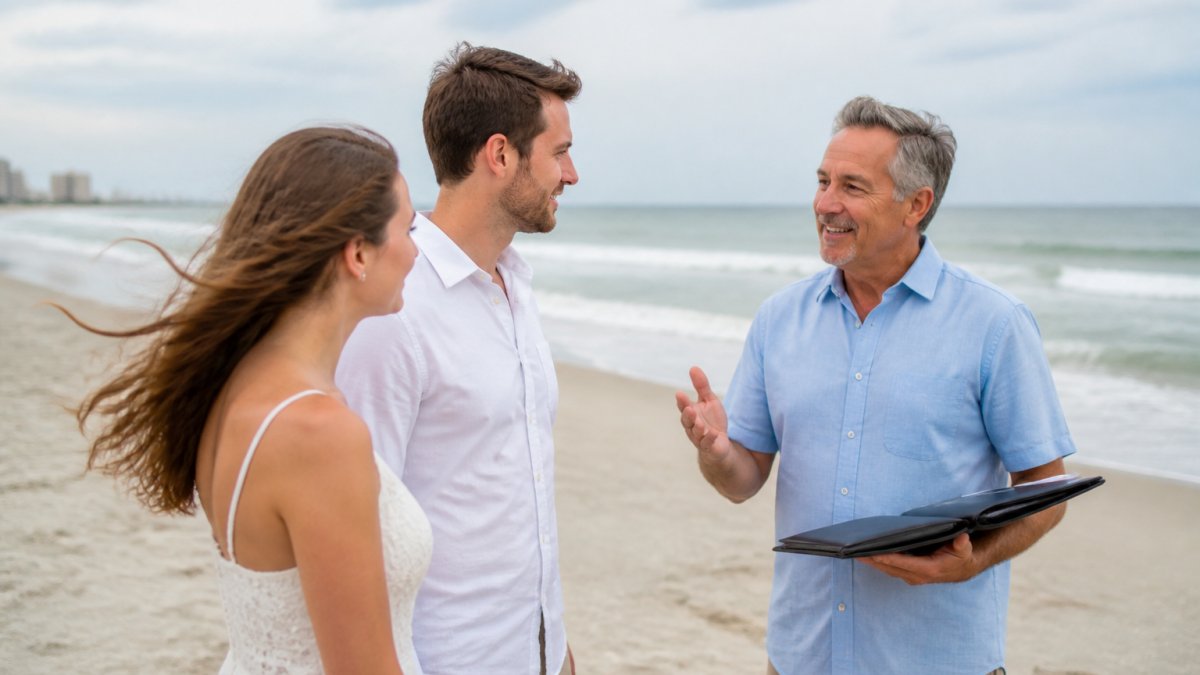
Planning a beach elopement comes down to getting the legal steps and logistics right so the day itself feels effortless. We handle marriage license requirements, design a custom ceremony around your story, and guide you through rituals like unity sand or handfasting so the flow never feels forced. Our planning calls and personalized ceremony language mean you're not handed a generic script, and our services cover everything from a simple civil-style signing to a full ceremony with rehearsal planning.
Frequently Asked Questions
What permits are required for a beach wedding ceremony?
Permit rules vary by location. Many public beaches require a special event permit for ceremonies with chairs, arches, or amplified sound, while simple ceremonies with just a couple and officiant may need nothing more than a beach access pass. Some areas also limit group size or restrict commercial activity. Contact the local parks department or city office where you plan to marry, and confirm whether your officiant needs a vendor permit. Apply at least four to six weeks ahead, since summer weekends fill up fast.
What should be included in a beach elopement checklist?
A solid beach elopement checklist covers three categories. Legal items: marriage license, officiant contact, witness names, and signed documents. Attire: sand-friendly footwear, a light cover-up, hair pins, and a tide-friendly hem length. Logistics: water, sunscreen, a small towel, permit copies, backup location address, and a charged phone. Add a small emergency kit with safety pins, blotting paper, and stain remover. Pack everything in one bag and assign a trusted guest to carry it so nothing gets left in the car.
How do I handle weather contingencies for a beach wedding?
Check the forecast starting five days out, then again the morning of. Wind is more common than rain on the coast, so bring hair ties and a weighted arch base. If storms threaten, have a backup location ready: a covered pavilion, a beachfront rental, or a nearby indoor space. Share the backup address with every guest in advance. Build a 30-minute buffer into your photography timeline so a passing shower does not derail the ceremony. Most beach ceremonies can proceed in light rain with umbrellas.
What are the biggest elopement mistakes couples make?
Common mistakes include skipping permit research, underestimating wind and tide conditions, and forgetting to confirm witness requirements for the marriage license. Couples sometimes forget to build buffer time into the photography schedule, which can create stress if the ceremony runs late. Choosing a location without checking public access rules, parking, or accessibility for older guests is another frequent issue. Additionally, waiting too long to book an officiant during peak season can lead to limited options for a preferred date and time.
Check Your Date
Related reading
Comments